
The 5-Minute Diagnostic: Which Expression of the Stabilizer Pattern is Running Your System?
High-capacity women are frequently praised for their efficiency, but efficiency is often a mask for a more rigid, structural identity pattern. This is not a personality trait or a choice you made in a vacuum. It is the Stabilizer Pattern: a foundational architecture where your identity has become synonymous with the "infrastructure" that allows everyone else’s life to function.
If you are a woman who is externally successful but internally fragmented, the friction you feel isn’t burnout. It is identity dissonance. You have built a personal operating system designed to stabilize systems: businesses, families, communities: at the expense of your own sovereign authorship. To change the output of your life, you must first diagnose the expression of the pattern currently running your internal governance.
The Stabilizer is Not a Personality Type; It’s a Structural Default
The Stabilizer Pattern is a form of identity architecture that prioritizes the maintenance of external equilibrium over internal alignment. It is not something you "are"; it is a framework you inhabit. For the high-functioning woman, being the stabilizer is a survival adaptation that has been professionalized and perfected over decades.
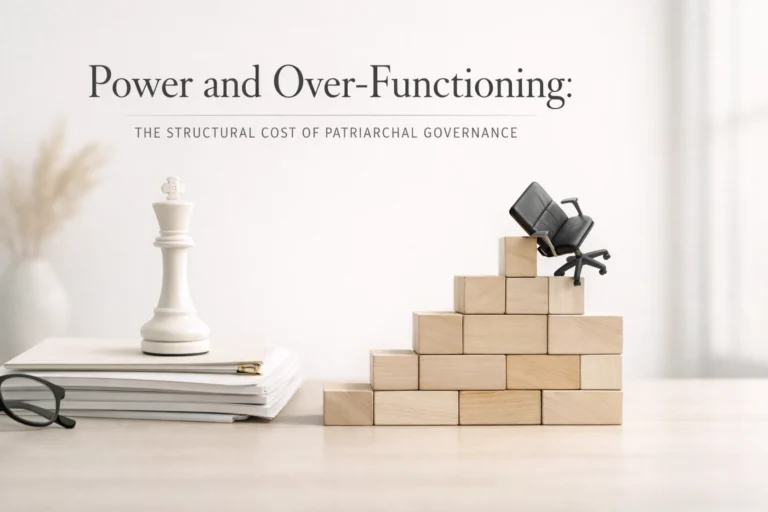
You are not merely "helpful" or "organized." You are the invisible load architecture for your entire ecosystem. This means that if you stop moving, the system you support: whether that’s your executive team or your household: experiences immediate structural failure. This is Responsibility Asymmetry. You carry the weight of the collective while the collective experiences the benefit of your over-functioning.

Identifying the Three Primary Expressions of the Stabilizer Pattern
While the core of the pattern is the same: maintaining stability for others: it expresses itself through different architectural modes. Understanding which one is active in your system is the first step toward reclaiming internal authority.
1. The Relational Buffer (The Shock Absorber)
The Relational Buffer functions as the emotional and operational padding between people and their consequences. In this expression, you use your high capacity to absorb the friction, incompetence, or emotional volatility of those around you. You are the one who "smooths things over" before a meeting or anticipates a family crisis before it lands.
The cost here is high. By functioning as a buffer, you prevent the system from receiving the feedback it needs to evolve. You are essentially paying the "stability tax" with your own vitality so that others don't have to experience the discomfort of their own lack of agency.
2. The Architectural Anchor (The Required Presence)
The Architectural Anchor builds systems that are technically efficient but structurally dependent on her presence. If you have ever said, "I can’t take a week off because everything would fall apart," you are likely running this expression. You haven't built a business or a life; you have built a job that requires a permanent, high-level maintenance worker.
This expression is common among founders and executives who have mastered the art of being "required." The trap here is the Illusion of Alignment. You think you are leading, but you are actually just reacting to the maintenance demands of the infrastructure you created. You are not the sovereign author; you are the primary tenant of a high-maintenance building.
3. The Crisis Synthesizer (The High-Stakes Stabilizer)
The Crisis Synthesizer thrives: or rather, survives: by being the most competent person in the room during a collapse. This expression of the Stabilizer Pattern is activated by chaos. You have an uncanny ability to synthesize complex data and provide a clear path forward when others are panicking.
While this looks like leadership, it is often a reactive pattern. You are tethered to the "C.A.G.E. loop" (Complexity, Anxiety, Governance, Execution), where your internal authority only feels valid when it is solving a problem. Without a crisis to stabilize, you may feel an identity void, leading you to unconsciously maintain a certain level of chaos just so you have a reason to exercise your capacity.

The Cost of Being the Infrastructure: Why High Achievers Feel Empty
The deep restlessness many high-achieving women feel in midlife isn't a "midlife crisis." It is the realization that they have spent twenty years being the infrastructure for everyone else's dreams. When you are the stabilizer, your personal operating system is optimized for external output, not internal coherence.
This leads to a specific type of exhaustion that sleep cannot fix. It is the exhaustion of being Responsibly Asymmetric. You are responsible for the outcomes, but you lack the sovereign authority to change the structure because the structure is what defines you. To shift this, you must move from being "required" to being "self-led." This is the core work of identity architecture.
The 5-Minute Diagnostic: Which Expression Is Yours?
Recognition is the first movement toward sovereignty. You cannot re-architect a system while you are still denying that the blueprint exists. We have developed a quick diagnostic to help high-capacity women identify their specific archetype pattern and see the invisible load they are currently carrying.
This is not a personality quiz. It is a structural assessment of your current governance model.
Take the Stabilizer Assessment here
Upon completing the assessment, you will receive your specific profile, outlining how the Stabilizer Pattern is impacting your decision-making, your energy levels, and your capacity for future growth.
Bonus: The HER Alignment Map™
When you complete the diagnostic, you will also receive the HER Alignment Map™. This is a strategic framework designed to help you visualize the gap between your current "stabilizer" state and a sovereign, identity-led operating system. It provides the initial coordinates for redistributing responsibility and reclaiming the internal authority that has been outsourced to your to-do list.

Beyond the Pattern: Reclaiming Sovereign Authorship
Breaking the Stabilizer Pattern is not about doing less; it is about being different. It is a shift in the governing layer of your life. When you move out of the stabilizer role, you will likely encounter Identity Grief. There is a certain safety in being the one everyone relies on. There is a specific social currency in being "the strong one" or "the one who has it all figured out."
Reclaiming your agency means being willing to let the systems you’ve propped up experience their own weight. It means moving from a reactive "0-12 blueprint" (the inherited patterns of use/usefulness) toward an identity-first architecture.
This work is for the woman who knows she has a higher capacity than her current life is allowing her to express. It is for the woman who realizes that being "efficient" is no longer enough: she wants to be the sovereign author of her own existence.
Further Reading for Your Internal Architecture
To deepen your understanding of these frameworks, explore these resources:
- [The Over-Functioning Trap: Why High Capacity Feels Like a Burden] – Understand the mechanics of how we take on more than our share of the system.
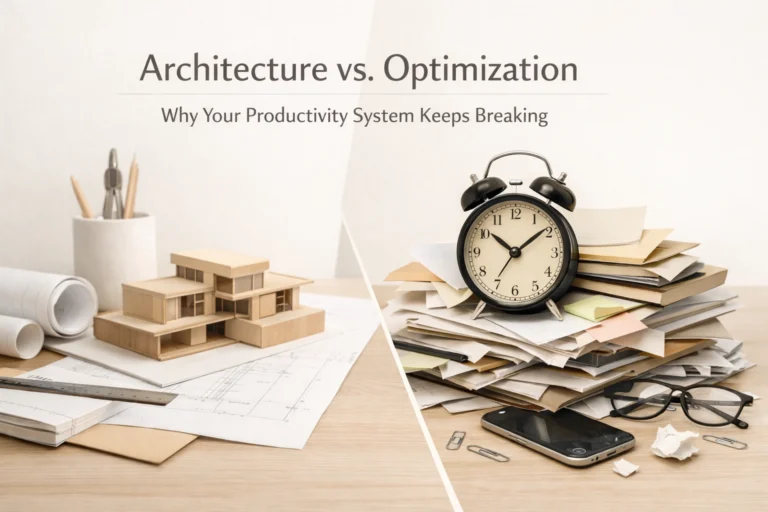
- [Identity Architecture vs. Productivity Hacks] – Why you can't solve a structural identity problem with a better calendar.
- [Internal Authority: The Core of HER Sovereign OS] – How to stop outsourcing your decisions to external expectations.
The friction you feel today is the signal that your current system is no longer large enough to hold the woman you are becoming. The first step is naming the pattern. The second is choosing to re-architect the system from the source.